

The lease-up projections looked perfect on paper. 200 units in downtown Dallas, prime location, competitive pricing, modern amenities. The developer expected 80% occupancy within six months.
Eighteen months later, they were still at 45% occupancy while a comparable property two blocks away had hit stabilization in four months.
What made the difference? Strategic branding.
As multifamily branding specialists who’ve worked with developments from concept to lease-up, we see the same five critical mistakes that can add months to your lease-up timeline. Here’s what’s costing developers time and money.
Mistake #1: Starting Branding at the Wrong Time

The Problem: Most developers start thinking about multifamily branding 6-8 months before opening. This timing creates a cascade of missed opportunities that impact everything from positioning to lease-up velocity.
Why It Matters: The most successful developments we’ve worked with understood that brand strategy influences far more than just marketing materials. When branding becomes an afterthought, you’re already behind.
The Real Cost: In our experience, this mistake consistently adds significant time to lease-up periods in competitive markets.
What Smart Developers Do: The highest-performing developments we’ve worked with follow a specific timeline that maximizes brand impact. This strategic approach helped AVEN DTLA stand out among 2,000+ competing units launching simultaneously.
Curious about the optimal timeline? Our brand audit reveals exactly when each element should happen for your specific market and timeline.
Mistake #2: The “Follow the Leader” Trap
The Problem: Walking competing properties feels like market research. It’s actually the fastest way to guarantee invisibility in your market.
Why This Backfires: When every apartment complex branding in your market uses the same aesthetic and messaging approach, prospects can’t differentiate between properties. This forces them into price-based decisions.
Real Market Example: In one West Hollywood submarket, we analyzed five comparable properties within a half-mile radius. Four used nearly identical branding approaches and consistently struggled with extended lease-up periods. The fifth took our strategic differentiation approach and we observed significantly faster stabilization.
The Differentiation Secret: There’s a specific methodology for identifying positioning white space in saturated markets. It involves analyzing three key market dynamics that most developers never consider.
Mistake #3: The Persona Assumption Problem
The Problem: Most developers brand for themselves, their investors, or a generic “luxury” market rather than their actual target renters.
Why This Kills Conversion: A 55+ active adult community requires completely different brand messaging than a property targeting recent college graduates. Generic positioning resonates with no one specifically.
The Data We See: In our experience, properties with precise persona alignment consistently achieve faster lease-up velocity than those using generic positioning.
The Persona Research Gap: Most developers skip the crucial research phase that reveals what actually motivates their target renters. This isn’t demographic data—it’s behavioral and emotional insights that drive housing decisions.
What Changes Everything: There’s a specific framework for uncovering the psychological triggers that make prospects choose your property over competitors. The Fitz on Fairfax used this approach to cut through West Hollywood market saturation.
Ready to understand what really motivates your target renters? Our brand audit includes persona insights specific to your market.
Mistake #4: The Consistency Crisis
The Problem: Your website promises one experience, your leasing team sells another, and your social media shows something completely different. Confused prospects don’t lease.
The Hidden Impact: Real estate development marketing involves 15-20 different touchpoints from first awareness to lease signing. Inconsistency at any point creates doubt and friction.
Where It Usually Breaks Down: We audit dozens of multifamily brands annually, and we consistently see the most common breakdown happening between digital presence and in-person experience. Prospects arrive expecting one thing and encounter something completely different.
The Cohesion Framework: Successful developments follow a specific brand system that ensures every touchpoint reinforces the same positioning. This isn’t just visual consistency—it’s strategic message alignment across every interaction.
The Multiplier Effect: When done correctly, brand consistency doesn’t just prevent confusion—it actually amplifies the impact of every marketing dollar you spend.
Mistake #5: Generic Naming Without Strategic Foundation
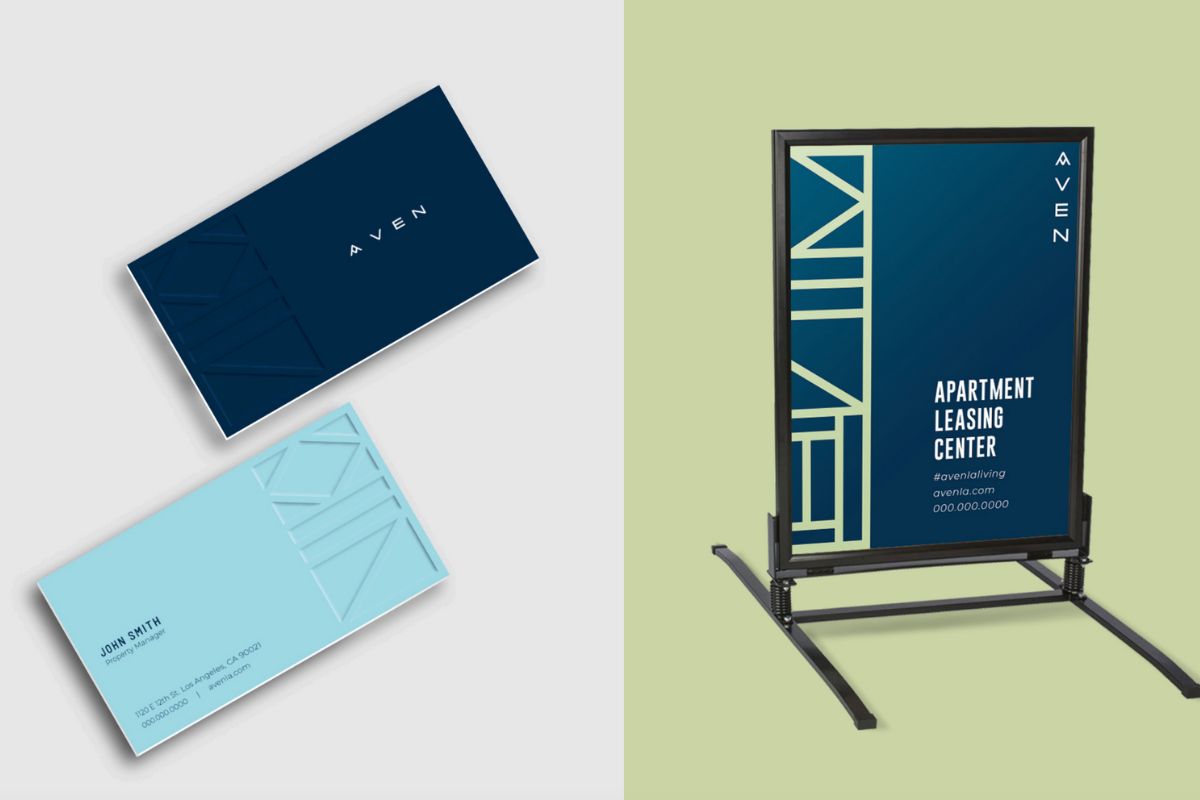
The Problem: “The Residences at [Street Name]” tells prospects nothing distinctive about your property and guarantees you’ll blend into search results.
The Missed Opportunity: Your property name is often the first brand touchpoint prospects encounter. Generic names fail to create emotional connection or memorability.
What We See in the Market: In our experience, properties with strategic names consistently outperform generically named competitors in both lease-up velocity and market positioning.
The Naming Trap: Most developers think naming is about sounding sophisticated or describing location. The most successful names we’ve developed follow a completely different strategy focused on emotional resonance and market positioning.
Strategic Naming Impact: AVEN DTLA’s name choice supported its premium positioning strategy. The Fitz on Fairfax’s playful name differentiated it from generic luxury competitors.
The Research Behind Great Names: Effective multifamily marketing names require trademark research, domain analysis, target market testing, and competitive landscape assessment. Most developers skip these crucial steps.
Wondering if your name is helping or hurting your positioning? Our naming analysis reveals the strategic opportunities.
The Pattern We See in Successful Developments
After working with property branding services across multiple markets, we’ve identified the specific sequence that consistently accelerates lease-up:
Strategic Foundation → Market Differentiation → Cohesive Implementation → Measured Optimization
The developments that achieve fastest stabilization don’t just avoid these five mistakes—they follow a proven framework that maximizes brand impact at every stage.
The Timing Advantage: Starting with strategic brand development 12-18 months before opening creates compound advantages throughout the entire development and lease-up process.
The Competitive Edge: In saturated markets, we’ve observed that strategic branding isn’t optional—it consistently becomes the difference between commanding premium positioning and competing primarily on price.
Is Your Development at Risk?
These five mistakes are more common than you might think. Even experienced developers fall into these traps because multifamily branding requires specialized expertise that’s different from traditional real estate marketing.
The Assessment Questions:
- When did you start thinking about your brand strategy?
- How specifically does your positioning differentiate from nearby competitors?
- Do you have research-backed target renter personas?
- Are all your touchpoints telling the same story?
- Does your name support your strategic positioning?
If you’re not confident about any of these answers, your development might be at risk for extended lease-up timelines.
Get Your Strategic Brand Assessment
Don’t let branding mistakes add months to your lease-up timeline. Our multifamily marketing agency specializes in helping developments avoid these costly errors.
Free 20-minute brand audit for multifamily developers:
- Strategic positioning assessment for your specific market
- Competitive differentiation opportunities analysis
- Timeline optimization recommendations
- Custom roadmap for your development phase
Ready to avoid these costly mistakes?
Power Your Brand →
- AVEN DTLA: Strategic positioning that leased 72 units in one day
- The Fitz on Fairfax: Distinctive branding cutting through market saturation
- True Connection Communities: Healthcare-focused positioning driving occupancy